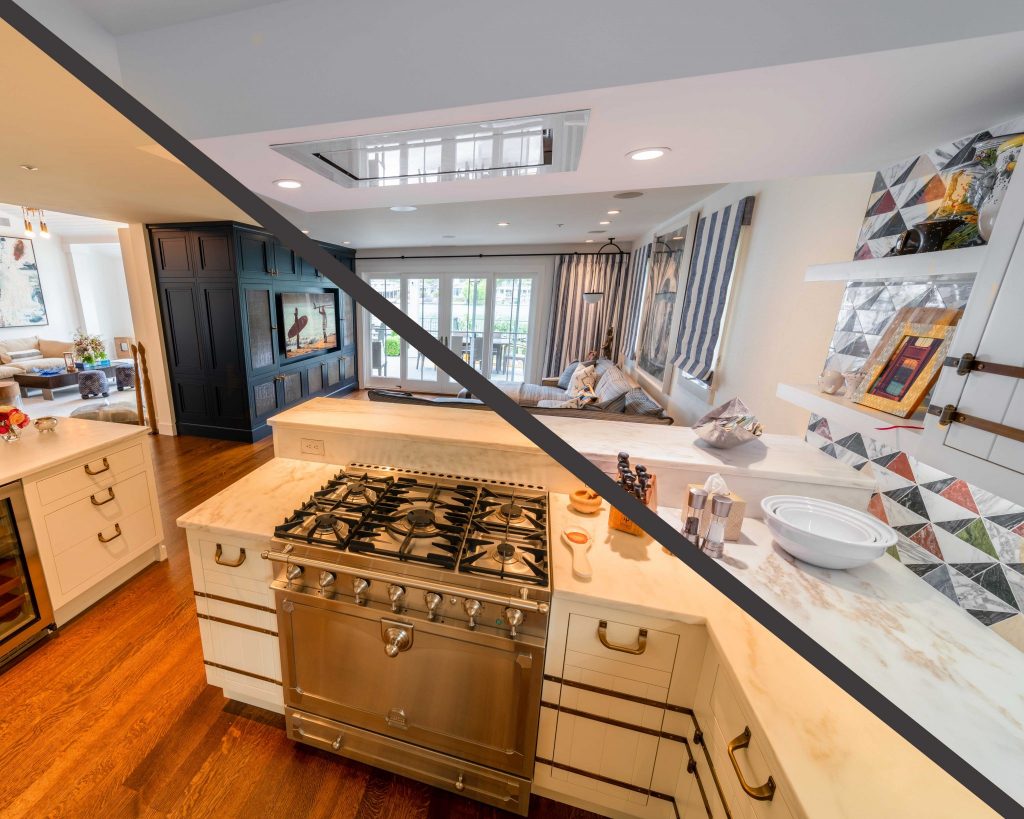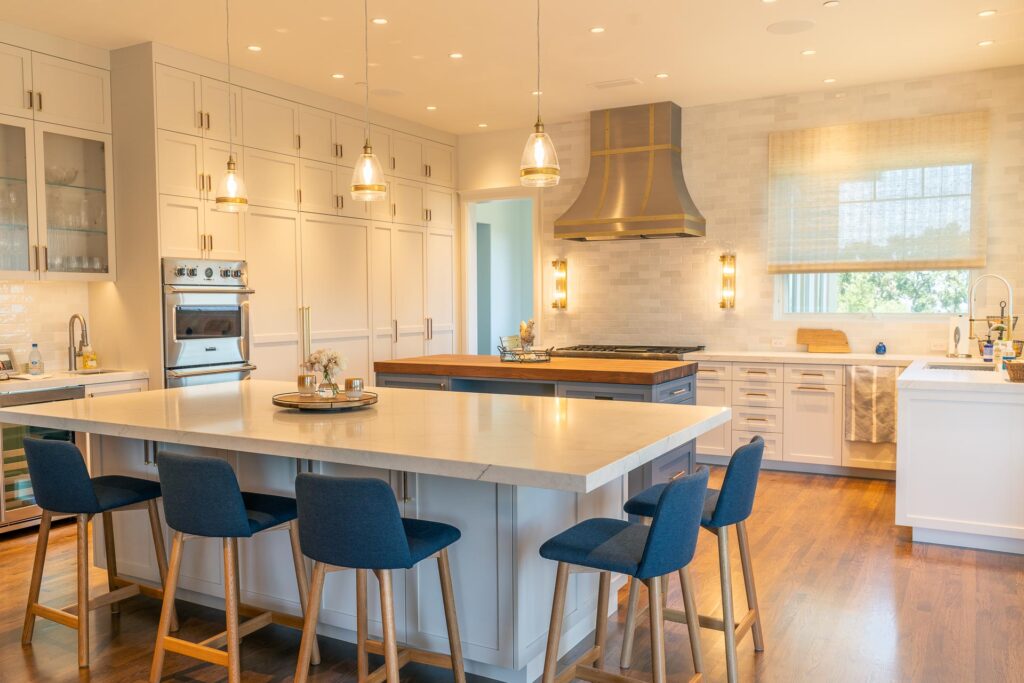
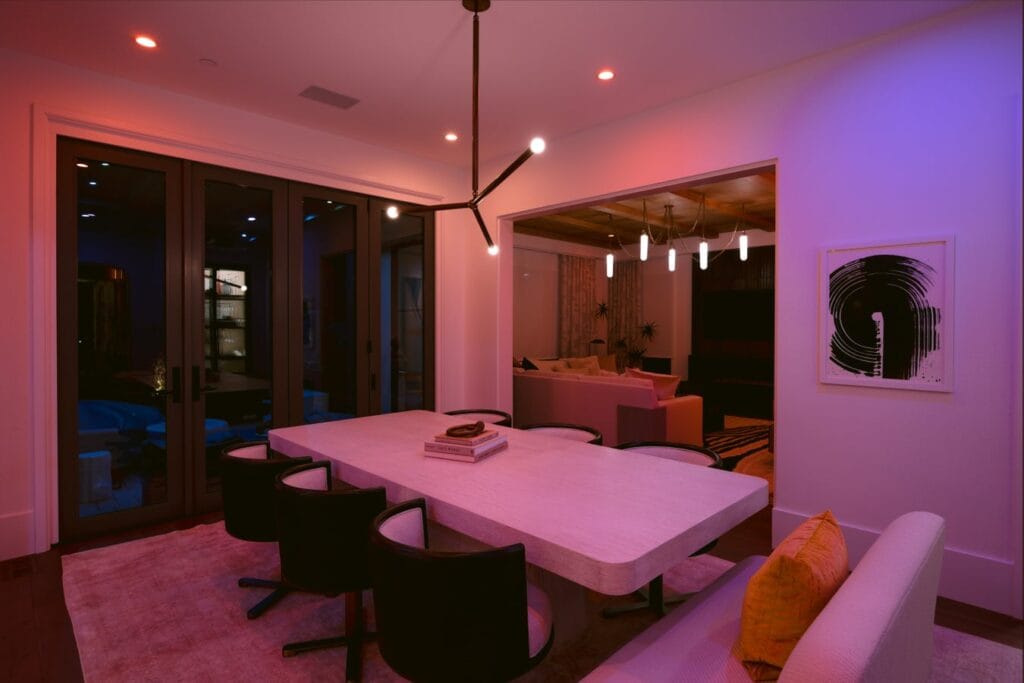
Not so long ago, color changing light was not possible for the everyday consumer. It most certainly was not readily available at your local big box hardware store now carrying options like Philips Hue. With technology in lighting and lighting control changing every day, this option becomes more available from manufacturers to the people wanting it in their homes. Before you can even consider RGB lighting, let’s define the different options that are currently available.
Defining RGB Lighting
RGB lighting is LED based light technology that can do exactly what is in the name; change from reds, greens and blues to everything in between. While just RGB lighting can produce a ‘white’ light, it will never create a pure white light. Since the LED chips are mixing the correct amount of red, green or blue light to make white, the actual colors never will fully disappear. Keep in mind when choosing the LED tape for the application, specify if you want to have a pure white lighting option.
Defining RGBW and RGBTW Lighting
If you are looking for the color changing option but will still want a clean white light as your main source of light use, you’ll need to look for a fixture that is RGBW or RGBTW. The difference between these and a baseline RGB fixture is that it has dedicated white light diodes. RGBW will specify on the fixture what white light you are getting; typically, the static white will be either 3000k or 2700k plus your color variation in the RGB.
Next, with the most flexibility, is RGBTW. You’ll have dedicated white LED diodes that are also tunable white, meaning you can have the ability to choose what color temperature of white you would like along with the ability of the RGB colors. Like specifying any light fixture, choosing what level of color opportunity you would like all depends on the application.
When to Use the Variations of RGB Lighting
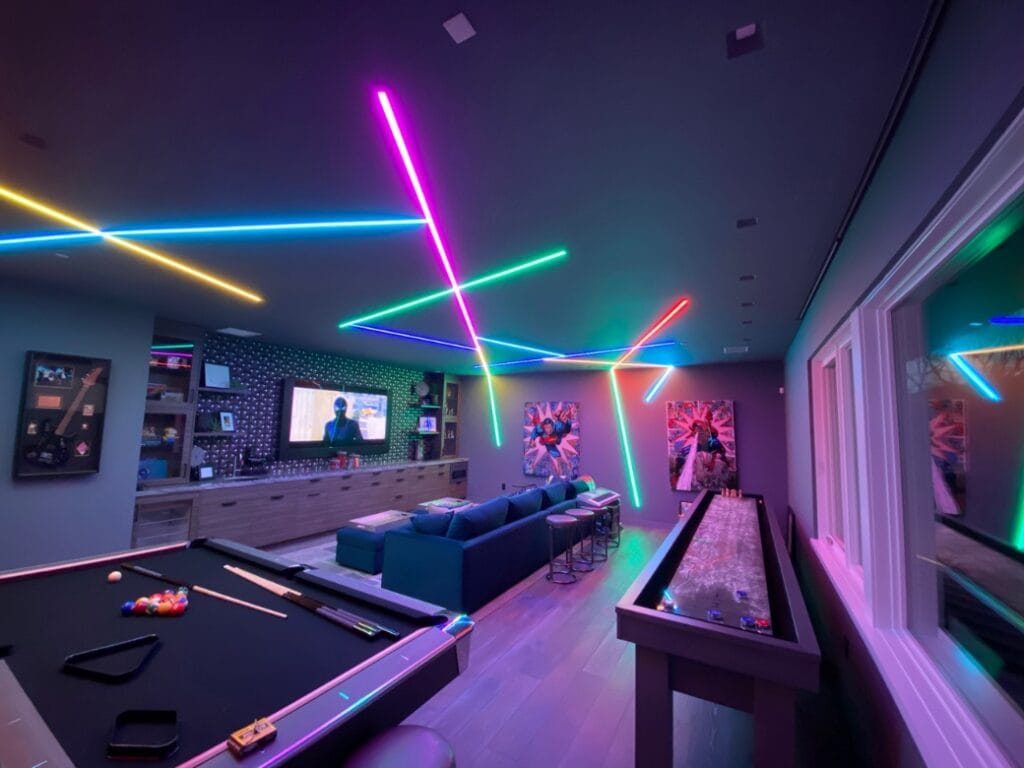
Think about when you see color changing lights. More times than not, concerts or Las Vegas come to mind. Very rarely anyone would think that color changing light is necessary in a home. It is not for everyone, but most certainly everyone could benefit from it. There are many benefits of tunable lighting that are more than just having the ability to do so. The RGB option should be used when the lighting is meant to always be on a specific color and white light won’t be necessary. RGBW or RGBTW should be used when the main lighting is white, but you would like the option throughout the day for different scenes and color temperatures to make a more unique experience in a room.
Final Thoughts on RGB Lighting
When done correctly, RGB lighting can make a great statement in your home and really elevate your living experience. Whether it will be used as a piece of art or used to create a sunset-like lighting scene at dusk, RGB+ is worth considering and implementing into your custom home. It is recommended to work with your control systems team and lighting designers to make sure everything will work correctly and programmed to your expectations. RGB lighting can bring color to your everyday life.