For decades, recessed lighting layouts have been driven by symmetry on paper. Clean, evenly spaced grids on a reflected ceiling plan (RCP) have long been considered the gold standard. While this approach may look organized in two dimensions, it often falls short in delivering a truly functional and visually compelling space. Today, lighting design is evolving and shifting away from rigid layouts and more towards intentional placement that responds to how a space is actually experienced.
The Problem with Designing Recessed Lighting in 2D
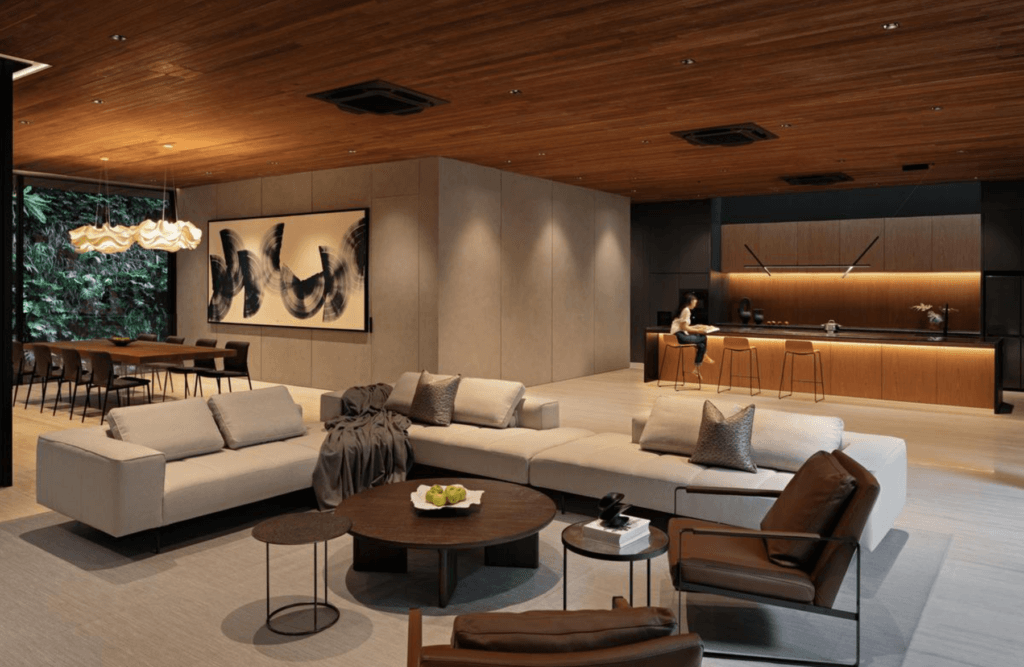
A reflected ceiling plan is limited as it is a technical drawing, not a real life plan. It reduces a three-dimensional environment into a flat diagram, prioritizing alignment and spacing over depth, texture, and real-world interaction. When fixtures are placed solely to “look right” on a plan, the result can be over-lighting, poor beam distribution, and a lack of visual hierarchy.
Walls may be left under-lit, artwork ignored, and key architectural features flattened. Meanwhile, unnecessary fixtures increase cost, energy consumption, and ceiling clutter all without improving the quality of light.
Modern Lighting Design: Placing Recessed Fixtures with Purpose
Contemporary lighting design starts with intention, not symmetry. Instead of asking, “How do these fixtures line up?” the better question is, “What is this light doing?”
Each recessed fixture should serve a clear purpose:
- Highlighting vertical surfaces such as walls or millwork
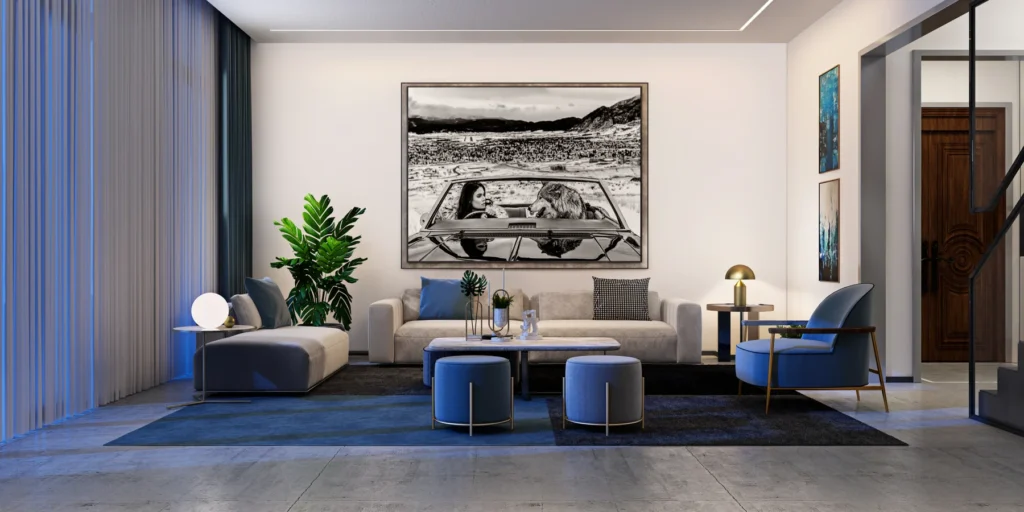
- Accenting artwork or architectural details
- Supporting task areas like kitchen counters or vanities
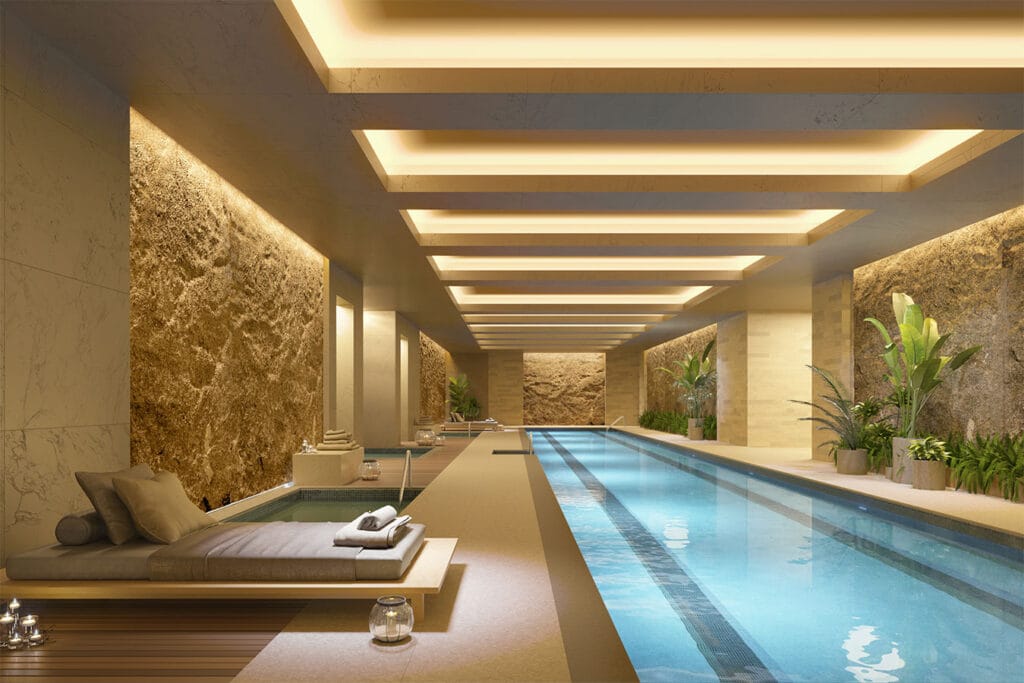
- Contributing to overall ambient layering
This approach often results in layouts that feel less uniform on paper, but are significantly more refined and effective while living in the space.
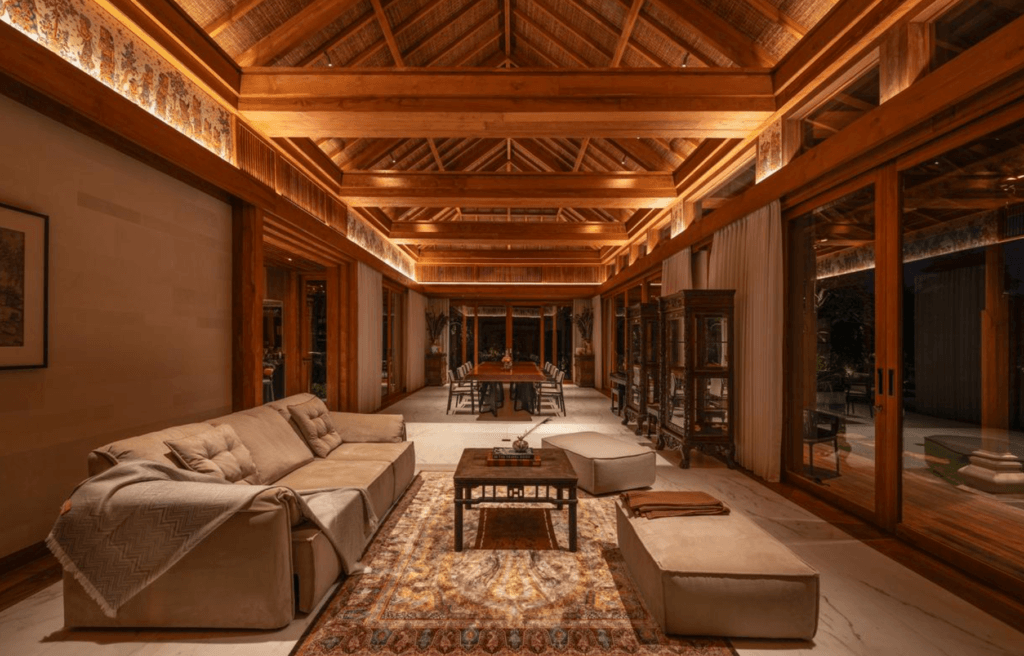
How Intentional Lighting Improves Visual Comfort and Reduces Glare
When recessed fixtures are aligned purely for symmetry, they often end up in positions that create glare or discomfort, especially when placed directly above seating areas, circulation paths or sightlines.
Intentional placement considers how people move through and occupy a space. Fixtures are positioned to reduce harsh contrasts, control beam angles, and minimize direct view into the light source. The result is a more comfortable environment with better light quality and usability.
Designing for Architecture, Not the Ceiling Plan
Lighting should respond to architecture, not the other way around. This means aligning fixtures with elements such as walls, cabinetry, furniture layouts and focal points; not arbitrary ceiling grids.
For example, placing recessed fixtures a consistent distance off a wall to create even wall washing will have a better visual impact than centering fixtures in a room for the sake of symmetry. The architecture becomes more pronounced, and the space feels intentionally composed and elevated.
Why Recessed Lighting Should Be Designed in Section, Not Just Plan
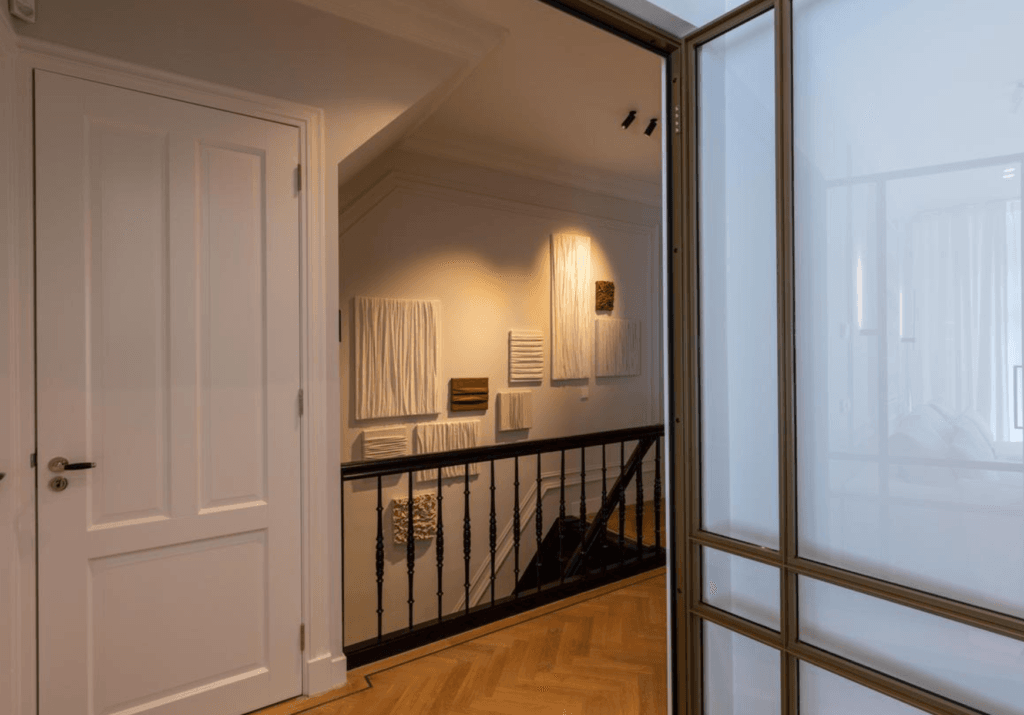
Designing in section allows for precise placement that achieves desired lighting effects, whether it’s grazing a textured wall, evenly illuminating artwork, or providing balanced task lighting. This level of consideration is impossible to achieve through a 2D layout alone.
Conclusion: Rethinking Recessed Lighting Layouts for Better Design Outcomes
When recessed fixtures are placed with purpose responding to architecture, function and human perception the result is a space that feels cohesive, comfortable, and visually engaging. Ultimately, it’s not about how the plan looks on paper; it’s about how the space feels when the lights are on.
If you’re ready to add a bespoke lighting luxury plan for your home at an obtainable price, reach out to Lighting by Design at (415)-883-7700.